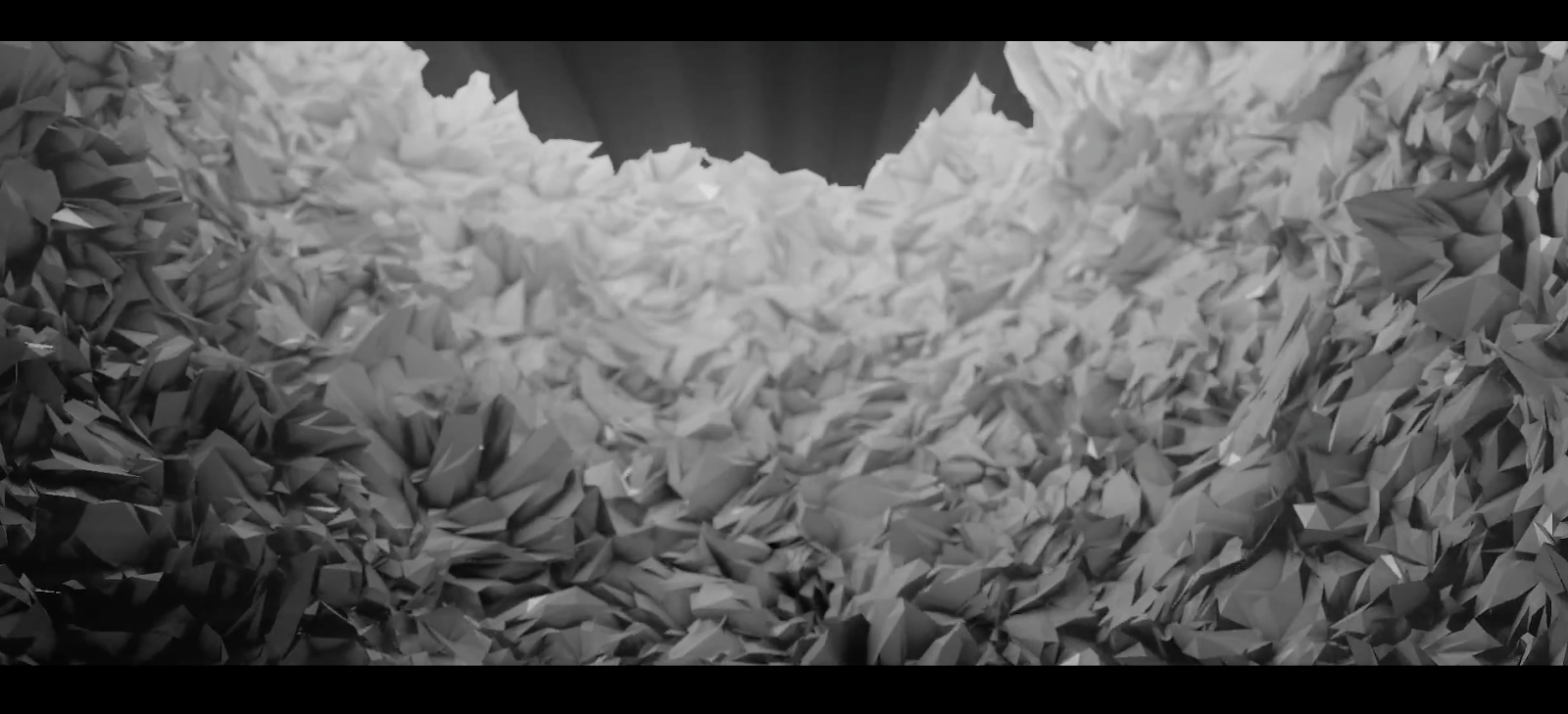
Schermata 2015-05-05 alle 18.03.17.png

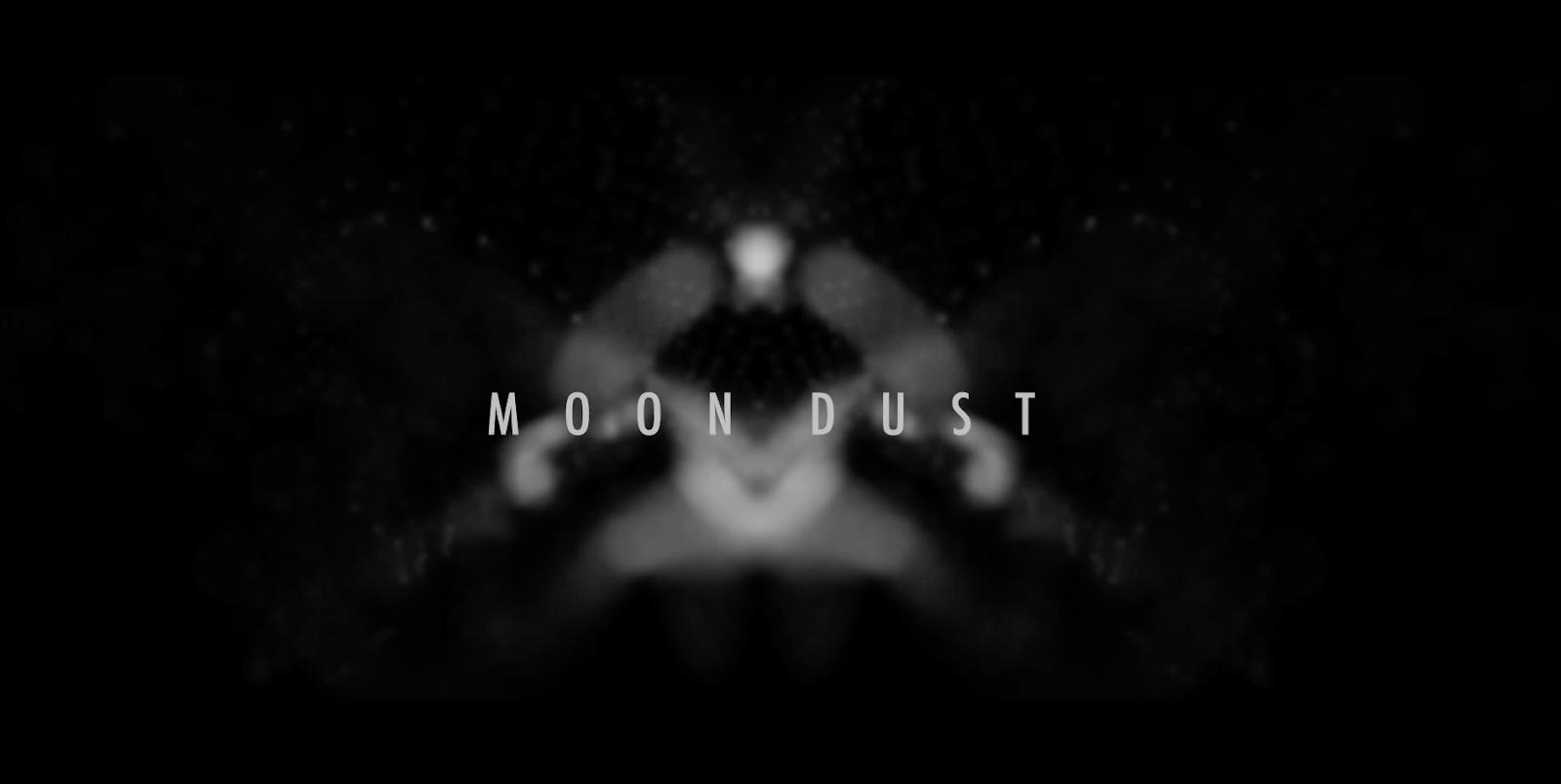
At the beginning of March, I started a small project by myself, creating a Music video for Petri Kiviniemi, in art Moon Dust. The idea was to create some visuals that would translate his track “Believe” into art, without being overboard with effects but still keeping the mood of the song.

It was great how we ended up collaborating! Petri is working in our school everyday and I usually study/work in same room as he does. One day we commented each other’s works (his music and my animations) and we thought it would be nice idea to put them together.

TAMK gives great opportunity of networking and meet people who has different skills. Collaboration in projects has been a great tool of learning for me and I think that’s what TAMK should be proud of, because it gives the chance to work with different people, from music field to animation.

This was my third Music video in a year but first ever by myself!
I was pretty scared of the result, but I was motivated to learn new things.
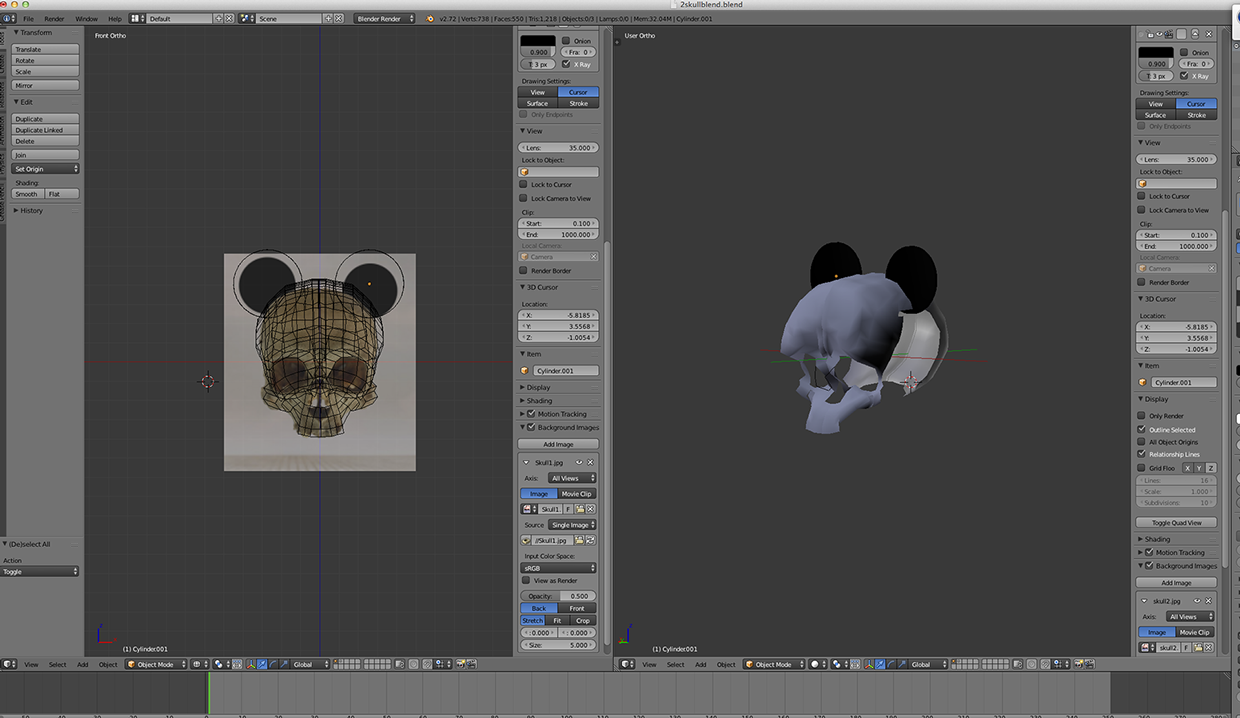
At first I started sketching some ideas and storyboarding. The next step was to model in 3D the symbol of Moon Dust (a skull with ears).
d15b74e2922fa449de07e0f41e42d703.png
Work in progress of modelling the skull

After the model was ready, I worked in After Effects with Trapcode plug-ins.
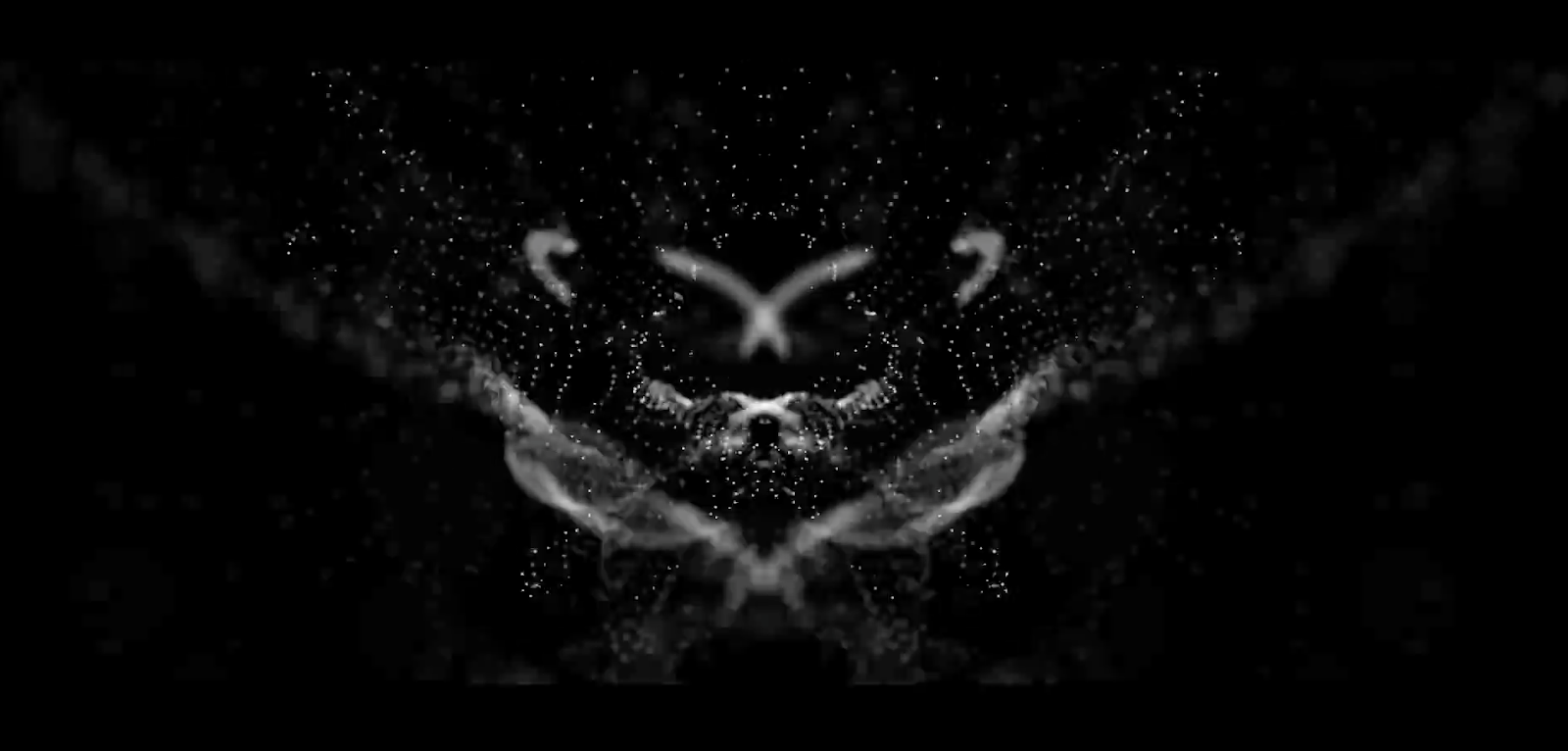
What I did was to use the OBJ model of my skull and create the particles around it using Form. I matched the movement to the beat with Soundkey and some expressions.
For the rocks I used Trapcode Mir, Particular and Shine. For the glitch effect I used displacement map.

Schermata 2015-05-05 alle 18.02.47.png

Schermata 2015-05-05 alle 16.27.16.png
Schermata 2015-05-05 alle 16.26.51.pngSchermata 2015-05-05 alle 16.27.06.png

At the end of March the Music Video was ready to be published!
The Music video has been accepted to Student Art Festival [STARTFEST] - Florida - USA, a film festival where students compete against their peers and receive valuable feedback on their work from leading industry professionals.

Here you can watch the Music video:
https://www.youtube.com/watch?v=wvBXkxLAMzk
Enjoy ^__^


Text & images by Sindy Giraldo Saldarriaga (Sindy Sindavsp), 
Degree Programme in Media
2015


There was a marketing campaign for getting the word out for people to apply for out Degree programmes for Media and Arts (and yes, Fine Art's still alive and kicking, although it has changed its form a bit), and now we have got the results for how many applied AND did the pre-tasks:

104 for Fine Art
85 for Interactive Media
73 for Music Production

The teachers are now busy with looking at all the applications and putting them in some order, and in April 2015, the entrance exams will take place for those applicants who got an invitation. Good luck for everybody! As Cai Melakoski once said, we would gladly take all applicants, but we have limited financial resources - so some sorting needs to be done.

A very warm thank-you for Caroline Büttner and Noora Honkaniemi, who did most of the work for our publicity campaign, and thank you to Sami Lindfors for the great videos!


- CF 2015

Mikko Karsisto explaining mocap

On Tuesday 3rd of February, our Media students got to see and visit the brand-new Mediapolis motion capture studio. Most of the students this time were first-years and exchange students attending the Game Design minor, and everyone was listening intently to Mikko Karsisto, who will be one of the people in the new company managing the studio.

Tuomo & Teppo


Teppo Nieminen of the Interactive Media students was brave enough to don up the mocap suit.

Of the teachers, Timo Kivikangas, Tuomo Joronen, Howell Istance, Antti Perälä and Carita Forsgren were attending the demonstration.

Howell in the middle

There will be a five-day workshop available in April 2015 for students who want to learn more about motion capture, taught most probably by Mikko Karsisto. So stay tuned for more info on this, if you got interested!


- Posted by CF

After the pitching session of  Eurosonic Noorderslag: The European MusicPlatform, our TAMK team as planned divided up to attend different panels. Here are some accounts of our team of students and the talks they attended over the course of the conference.

Titta Nevala

Titta Nevala 
I participated in the “Collaborations in Europe” panel. The participants were Fabien Miclet from Liveurope (Brussels), Zsuzsanna Bende from Random Trip (Budapest), Tom Vangheluwe from Dibrocco (Kotrijk) and Marjan Dewulf from Tourope (Diksmuide). All the participants told in a nutshell what their organizations are doing. All of the organizations aim to create better circulation of European acts in Europe.


Liveurope is a live music platform which aims to gather concert venues and give them support, as well as opportunities for European artists. Random Trip is a weekly jam club in Hungary that gives a chance for musicians to come together and get to know each other by experimenting with music. Tourope on the other hand is concentrated in creating good co-operation between concert venues around Europe and calling the whole industry to action. Dibrocco is an online platform for live show videos. It also aims to give education for upcoming bands and eventually create a virtual music festival.


The downside to these projects was that none of them work in Finland. Only Liveurope worked in northern Europe at all. They were also the only ones who said to even be interested in co-operation with the Nordic countries when I asked about it. I guess Europe still doesn't always reach here, which is a real shame.

Mark Malyshev


Mark Malyshev

The panel that I attend was entitled “360º VIRTUAL REALITY MUSIC VIDEO/ STREAMWATCHR / KOLLEKT.FM". The panel consisted of Stephen O'Reilly (Shuffler.FM, GB), Chief marketing officer at curated internet radio service Shuffler.FM., and Ralph Simon (Mobilium, GB) CEO at Mobilium Global Limited.

This discussion was basically three presentations, which consisted of three new different products in music world. First was 360º music videos presentation about video clips that shot in new way for music industry and could be checked by Oculus Rift or *surround video* app. Next was a presentation about Streamwatchr. Streamwatchr is a service designed to monitor the world's music listening behavior. Data is based on Twitter, MusicBrainz, Youtube and Last.fm. The last presentation discussed Kollekt.fm. This service aims to help music listeners corral music from Facebook, SoundCloud, and YouTube, so they can keep it all in one tidy place.


Alvaro Moreno

 Alvaro Moreno

Ok the conference I will talk about a bit was the panel called "Global A&R - Developing Talent for the Int'l Stage". The panel had Bert Meyer (International manager at Grandmono), Kai Robøle (CEO at Waterfal music) and Sat Bisla (A&R, Mesexpo, GB). They discussed how important A&Rs are to the music world. A&R is the part of music business that has the responsibility of finding the talents. Nowadays one could find any artist in the internet but, like in the old times, nowadays the A&Rs prefer finding new talents in live events or inviting people to their premises in order to hear what they can do.
 
In the modern days is not just about finding a relevant artist for today but they need to find an artist that is worth at least 5-10 CDs in a period of time of 5 years. A&R is the purest part of the music business, is just about finding the right person at the right time and as they mentioned is 90% luck.


Kimberly Grice

Kimberly Grice

In 2009 when I first started traveling to Finland I would travel via Iceland to the mainland of Europe. Little did I know but it was the beginning of a love affair with Icelandic music.  Countless hours logged in the airport translated into countless hours of listening Icelandic music.
Needless, to say I was quite please to read the words, “Iceland Erupts at Eurosonic Noorderslag” when checking the conference schedule.  It goes without saying there were several discusses that I made note to attend!

One of which was…
Iceland Airwaves- Can a Small City Festival Transform an Entire Country?”
The panel consisted of Grímur Atlason (Iceland Airwaves, IS) Festival Manager and Booker of Iceland Airwaves/ Kevin Cole (KEXP, US) Program director-DJ at radio station KEXP in Seattle/ Dagur B. Eggertsson (Reykjavik City, IS) Mayor of Reykjavik City/ Ragnheiður Elín Árnadóttir (Industry and Commerce, IS) Minister of Industry and Commerce Iceland.


Now for a bit of back history and stats; Iceland Airwaves (I.A) is a music festival that takes place in November. It started in 1999 and has grown to an attendance of 60,000/ 50 venues/ 680 off-venues/ 220 artists. The festival spans five days (Wednesday – Sunday).
Given the fact that “1876 was the first time two or more people played an instrument in the same room, which amounted to a venue of sorts in Iceland and Iceland skipped the Industrial Revolution all together, the above numbers are quite impressive!

As the discussion started the question “What makes Iceland so different in the creative industry?” came up. The central focus of the discussion was Iceland’s unique approach to the creative industry; starting with these concepts.
1. Balance in all things - This concept can be seen in practices of “one must import to export Icelandic music”, the collaboration between Icelandic Airlines, the festival promotors, and government offices.
2. Festivals need a safety net - In this case this aspect is seen in the model of “the festival pays its dues via creating an economic avenue for the city, the country. In turn the government supports the festival in hard times.
3.  Be trustworthy - Make something trustworthy and people will come.
4. Just Do! - In short…”Life is a learning process. Think about what you want to say/ do…then say it, do it, be creative”.
5. Draw connections - Draw connections between emerging artists and established artists.

The last concept “draw connections” has found a strong support in the form of Kevin Cole who is the Program director-DJ at radio station KEXP in Seattle.  Kevin spotlights not only recognized Icelandic artists on KEXP Live but is also interested in championing new music!
To give you a taste of KEXP Live check out the link below.  In this particular live performance KEXP showcases the band Icelandic band Sólstafir, who also played a gig at the Vera during Eurosonic.

Last year I attended the “Music & Media Conference” in Tampere. During one of the discussions one of the director/manager of a major music label and record company announced that they would be developing a Nordic/Scandinavian stronghold of festivals in Sweden, Denmark, Norway, and Finland.  Noticing that he didn’t mention Iceland I questioned him after the discussion as to whether or not Iceland would be included in this Nordic/Scandinavian infer-structure of festivals/ artists.
His response was, “No…Iceland is too far away and not of importance!” 

Given the strong Icelandic presence in the world across different genres of music/ the overwhelming response of fans to Icelandic music, art, the very culture I can’t help but wonder if this director/manager has had a change of heart!


Recently, a group of six from TAMK consisting of Timo Kivikangas, Harri Karvinen, Alvaro Moreno, Mark Malyshev, Titta Nevala, and myself attended the Eurosonic Noorderslag: The European Music Platform Conference/Festival that took place from the 14th-17th of January in Groningen, Netherlands.

Eurosonic is Europe’s largest showcase festival, taking place over a four day period starting on Wednesday and ending on Saturday.  It is part of The European Music Conference and Showcase Festival Eurosonic Noorderslag. Panels consisting of some of the music industry’s top figures, innovators, and creative entities. Throughout the festival, over 300 bands and acts perform on 36 stages in the city center of Groningen.

Upon arriving in the Netherlands, we were greeted with bleak, rainy weather, that by the end turned into a mixture of rain and snow. After settling in, getting our bearings, we set about creating a game plan as to how to make the most of this brilliant opportunity! This consisted preparing ourselves for the next day’s pitching session, marking to schedule the discussions and performances that we wished to see together as a group or as individuals.

The first order of business on the first day of the conference comprised of the team in cooperation Dutch students pitched songs to audience. These songs were created via collaboration between the students at Leeuwarden University and TAMK. The cooperation involved one week of songwriting, every day producing a song from one genre, partnerships switched on a daily base. This resulted in 25 demo songs of good quality. Seven songs were then chosen to be produced by a team in Finland, which resulted five of the songs being produced. 

The songs received positive feedback!!

The start of the pitching session


No music, no dance, no powwow!”- Owl Dance Records

After the pitching for the songs, Titta Nevala spoke about the creation of the record company labeled, Owl Dance Records which an indie record label founded in Tampere 2014. It enables students to get a catch of the record company world hands on. Owl Dances first release, a split vinyl filled with good house music will be released this spring.

Titta Nevala

Tampere is situated north just two hours apart from the capital city, Helsinki. We have a population of 222,512 people, making us the third largest city in Finland. We are located between two lakes: Näsijärvi and Pyhäjärvi, and we really love our green parks and lake scenery. The whole city is divided into two parts by the Tammerkoski rapids: the eastern and western sides, making it easy to navigate in the city.


Studying in TAMK gives you the advantage of being in a big city with all the comforts of a small one. But don’t take our word for it, we asked some of the students already studying in TAMK why they feel Tampere is the best place to study in. And here are their answers!


1. Why is it so cool to study in Tampere?
2. Why did you choose Tampere?
3. Which places are the ones everyone needs to have seen in Tampere?
4. Any cool bars/clubs/pubs in Tampere you would recommend?


ANDREAS (GER, 11IMP)

1. Tampere is relatively small, therefore everything is pretty easy to be reached, and the majority of the people here speak English.
2. I chose Tampere mostly because it is easy to get to, they have good connections to other countries, and people don’t mind if I don’t know enough Finnish.
3. Pyynikintori, Megazone, Kauppahalli, Rauhaniemi Sauna(especially during winter) and The Pispala Sauna.
4. I am not a big bar goer, but I recommend the OMA tea house not far from the train station, Bar K, Haralds Restaurant, and Space Bowling & Billiards on Hämeenkatu 23.


DYLAN (WALES, 12IMP)

1. You get to meet lots of people from many different countries at an international school.  Collaborating with them gives you a new perspective on ideas and valuable experience as well as making new friends.
2. It was the nicest city I had visited so far in Finland having also seen Helsinki, Jyväskylä and Kuopio. It's pretty, easy to get around and feels like home away from home.
3. Näsinneula, Särkänniemi and Pispala.
4. Jack the Rooster, Aussie bar, O'Connell's and Cafe Europa.


KIMBERLY (USA, 13IMP)

1. My core reason for applying to TAMK is because it was one of two ways that I would be able to move to Finland.  And, from there work towards making the move permanent! It was only by fate that TAMK in 2013 created a program that I was interested in..."the combination of music and media...MAINLY THE MUSIC!" So this year I love learning about music, music business, all the technical things!
2. This is an easy question! I fell in love with Finland as a country and Tampere became my first love when it came to cities. Good culture background, VERY STRONG music scene, not far from other cities (Turku, Helsinki, or Espoo), the majority of my personal friends live in or very near Tampere.
3. This question I really couldn't answer, reason being because much of what I cherish is wrapped around moments spent with my close personal friends. They are the ones that make a place memorable

4. The answer for the previous question for sure fits this question.


Any doubts on why Tampere isn’t the greatest city to study in? We didn’t think so! Apply now!
Application period: 7–27 January 2015. 


Application through www.studyinfo.fi
More information about TAMK Media and Arts study paths:
http://www.tamk.fi/web/tamk/media-and-arts
For more information on Tampere, check out Visit Tampere!

All pictures were taken by Carolin Büttner, a 2012 International Media student.

Friday 21st November

Morning sessions with keynote speakers and workshops.

Learning new in empowerment workshops

2014-11-21 01.28.23 1.jpg
Students listening to Mathias Haas from Supersocial. (Photo by: Ida Tokola)

Ida To: Many of us took part in Social Media Marketing workshop in the afternoon. It was held by Mathias Haas from Supersocial, who has worked as marketing consultant for many large companies like Red Bull. Our afternoon session flew by very quickly and we were amazed by his knowledge of every social media channel.

Haas for example told us how the Facebook algorithms work, which was very eye-opening since Facebook doesn’t really give out this information on their web page. We learned that if you want everyone to see your Facebook posts, the best thing to do is to post statuses with different formats (photo/link/text) and try to awake responsive conversations in the comments. 

Felipe: Just complementing what Ida said about Haas workshop. Other key point for sharing posts on Facebook is the timing. He said that only 8% of your “followers” will receive your posts, so one way to be sure that your posts will succeed is to schedule one-two hours before the time that you wanna share your post, because it takes that long to Facebook actually publish it in their timelines.


Confusion in the Student Exhibitions

Ida To: Before traveling to Graz, all of us were grouped with other European students to evaluate the EYA projects. We worked on these projects many weeks via Yammer, which was an online tool pretty similar to Facebook and Google Docs. Most of us had some problems with this task since EYA didn’t provide us with very clear instructions. We tried to manage and most of us ended up giving some feedback for our projects and designed posters for the Student Exhibition, which was going to take place during the awards.

So, in the afternoon of Friday 21st, we headed to Graz University of Technology to present our posters and student projects. There we were told to present our feedback and posters to an audience, who were to decide which student project had the best ideas. Some of us were happy to meet other fellow team members from all around Europe, when others noticed they were the only ones to present their team. Despite these confusing matters we were trying to have fun in the exhibition. We met a lot of people from Austria and other European countries, which was very nice.

Ida Tu: In addition to the international teams we had all worked in, there were surprise teams built from Austrian students of the Graz University of Technology so every project was supposed to have two posters - one made in Graz by local students, and one made by international teams and carried from elsewhere to the festival. This was the place where I met the team behind the project I evaluated (with Sami and other international students) which was GovFaces - with Sami we both felt they had a good if somewhat idealistic grasp of their project and we gave a lot of feedback as we discussed their project in a generally really great mood. Why I wanted to bring this up is explained a bit further down!

2014-11-21 08.09.10 1.jpg
Felipe and Tarina excited to see who has won this year’s European Youth Award (Photo by Ida Tokola)

The Evening Gala

Tarina: The evening gala was the thing we had all been waiting for. It was the ceremony for presenting and rewarding the overall winner of the European Youth Award, along with the other winning projects. The award ceremony took a while but it was worth the wait, after that it was time for, again, networking, buffet food of local goods, alcoholic beverages and dancing!
The party was held inside the mountain, in a space called Dom im Berg. The evening was hosted by Adam Montandon (the first ever EYA winner) and I have to say, he did very well of course, he’s been hosting the EYA parties for quite a while now.  

Felipe: Don’t forget to say that WE start the dancing!

Ida Tu: The winner of the European Youth Award 2014 festival was the project GovFaces I mentioned earlier, and while it naturally wasn’t perfect or complete I had to be proud of the guys working on it! They were real sweethearts and deserved to win, and I think both me and Sami managed to congratulate them in person when the award ceremony was over. They thanked us, the feedback team, also on stage which I have to admit was really heartwarming, because we all saw quite a lot work on evaluating these projects beforehand and giving thoughtful and constructive feedback.

DSC_0470.JPG
The EYA winners! (Photo by Tarina Tommiska.)

Following blog post summarizes the day two, 20th of November, at European Youth Award festival in Graz.

Tweet wall was used with great responsibility. Photo by Tarina Tommiska.

Web of Needs, Vision Hunting and Innovation Camp
Defining trends for web of needs for Healthy Life | Smart Learning | Connecting Cultures | Go Green | Active Citizenship | Money Matters | Future Living |
by Christina Maria Busch, Florian Kleedorfer and other members of Research Studio


Chrystal: The morning workshop which was conducted by the Research Studio (?) was split into three major parts:
  1. A presentation to introduce “Web of Needs” is about
  2. A collaborative session with all the participants by choosing 3 out of the 8 categories of own interest and discuss possible topics which concerns the “Web of Needs”.
  3. Followed by another round of discussion of the top 5 most voted topics from the second part.

Overall, I find that it assuring that people from different backgrounds and countries in all over Europe (and other parts of the world) seemed to have similar ideas on what our future looks like and how technology would help to shape that future.

2014-11-20 03.03.25 1(1).jpg
Chrystal, Ida Tuominen, Petra, Helmi, Alessandra, Felipe and other students brainstorming in the workshop. (Photo by Ida Tokola)

Helmi:
After hearing about the web of needs we swiftly moved on to the vision hunting which was an interesting experience to say the least. We would gather in groups and discuss different kinds of topics relating to EX. smart learning, connecting cultures, active citizenship and future living. This session was a bit confusing to me and it was really hard to get your voice heard through dozens of other loud voices. A lot of good ideas were created during that session though! It was really inspiring to see how people from other cultures and countries viewed these topics and what kinds of great ideas they had in store.

I went to the workshop/discussion group about future living and modern nomads, as did almost every single one of us. I found the idea of modern nomads to be nicely topical and interesting in many ways. We worked with the idea with a “roadmap” that Ida drew very skillfully and neatly. The group was a bit slow to start up so the workshop host had to nudge us to the right direction with visual exercises where we stuck pictures to the roadmap to present possible problems and success criteria.  I really enjoyed this workshop even though I wish I would have participated more. It’s a bit too easy for me to just take the spectator’s role when other people are working. I still learned a lot by just watching listening to other people share their ideas and visions. We completed the workshop with a canvas full of different kinds of outlooks on modern nomads so I could go ahead and say that the session was a success!

Petra:
Most of us TAMK students ended up choosing the same discussion group, the one with modern nomads. In MindTrek there was already some talk about these nomads, who are able to work wherever they want via internet so the basic idea was familiar to most of us.

Together we created a road map in which we added succession factors, core goal, secondary goals and challenges. One method we used was adding random pictures cut out of magazines to our road map and describe if it was a challenge, goal or succession factor. Some of the pictures were bit hard to add to our road map but with some wild imagination they all found their places.

There were couple of non-TAMK students in our group too and I was bit sad that they didn’t take too much part in the discussion - but I can’t blame them. It was easy for us to work together as we all knew each other and all had some experience of this kind of brainstorming. Our group leader didn’t have to guide us almost at all, we were working so hard already after we got an idea what this group discussion was about.

Alessandra:
Definitely no surprise when I arrived to the room with my red number-five paper to see that most of our classmates were sitting there, waiting to learn something that they can use when working as a modern nomad, living abroad. I know that my future lies with different project all around the globe, which is why I was rather pumped to know more about this lifestyle. We started to make a mindmap (that Ida so niftily illustrated), what are the first things to take care of before moving, possible obstacles, things to prepare and do when arriving and finding contacts. It was rather helpful afternoon and I did enjoy the fact that so many of us are interested in living abroad, working online and so-on.

Ida Tuominen presented the ideas to make the lives of modern nomads easier. Photo by Sami Lindfors/Felipe Santana.


Ida Tu:
I was really pumped about the topic most of us TAMK students had chosen - the modern (online) nomads - so I wanted to contribute to the best of my ability. I volunteered to draw and write out are ideas on the “roadmap” we created, honestly really inspired by the brainstorming everyone was committed to, and threw ideas back and forth with the other participants in the workshop.

After we gathered to meet up with all the different teams we kicked off a fishbowl session where one representative from each team had to sit in the middle of the room as they were interviewed about their team’s results while other 50+ people took the role of an audience and sat around the interviewees in a circle, hence “the fishbowl”. None of our team was exactly wishing to be the first one picked - I think even our international students have the Finnish mentality of not wanting to be in the spotlight in a stressing situation - and my earlier volunteering landed me in the middle of the room as our workshop leader pointed at me and offered “that tall one there” when Peter Bruck, the host, wanted to know which person is going to represent the modern nomad team. I have to admit it was an extremely stressing situation, but at least later on I was assured it went well and I represented both our team and TAMK in an adequate manner. I was asked consent of having one quote of my speech in an Austrian online magazine Mokant, so there had to be something that was expressed in an inspiring way (at least I can hope so!)

Rolands:
Group discussion - connecting cultures
During the workshop we had to come up with an idea/road/map or whatever how to connect project to its consumers. While everyone was randomly shouting their ideas without purpose I stayed quiet, made notes, simply absorbed floating information and gathered ideas. I arrived to get inspiration from people, projects, presentations but when Joseph (“Trash Out”) saw me making notes, I got into the spotlight, I had nowhere to run so I had to present my ideas. In the end instead of getting inspired I was the one who was inspiring. This lesson I learned has invaluable cost. Everyone has something to give.

unnamed.jpg
Notes I made during the workshop.

AFTERNOON SESSION: THE BEST IN DIGITAL CREATIVITY FOR SOCIAL GOOD
EYA Winners introduce their innovative digital projects to the audience

DSC_0430.JPG

Alessandra:
Later in the evening we headed to the Graz University of Technology. During this evening event, the host went through ALL of the projects, giving the teams a chance to pitch their projects to the audience. With their given time limit of 10 minutes, I was rather surprised that so many professionals there exceeded the pitch time-limit and the host had to cut off. The whole thing took all-in-all almost 4 hours so it was a little bit overwhelming considering the fact that we had only two 15 minute breaks. There of course, were some projects that caught my attention with the way they were presented such as SlidesLive (archive of presentation) from Czech Republic. The speaker ended their pitch in a grandiloquent manner with a metaphor and then literally set a garbage can on fire! love it.