The first XR Challenge event was held at Mediapolis on Tuesday 18th and Wednesday 19th September. It was organized by Business Tampere and Virtual Reality Finland in collaboration with TAMK, Business Finland and Leonidas, a local company specializing in web and mobile solutions as well as VR and AR implementation. At TAMK the people in charge of production were Jukka Holm and Timo Kivikangas.
The application period for the challenge and the organization itself for the event was earlier this year in spring. Eight finalist teams were chosen from roughly 40 applicants from numerous countries who submitted their initial concepts and ideas, to present their full demos at the event.
With the challenge portion itself being held on Tuesday, six teams that made it to the finals presented 10-minute pitches about their solutions to the range of judges. The jury included representatives from the three participating finnish industrial companies: Valmet, Fastems and Glaston, as well as Leonidas.
The six finalists in order of their pitches were CAM (Eligio.studio), Voconaut, Cybercom, Softability, Intopalo and SimLab IT.
The teams presented a variety of carefully planned and developed solutions to the issues presented by the three companies. After the pitches, the finalists presented their demos at their stands in the exhibition area, and the judges met up to discuss and decide on the winners of the challenge.

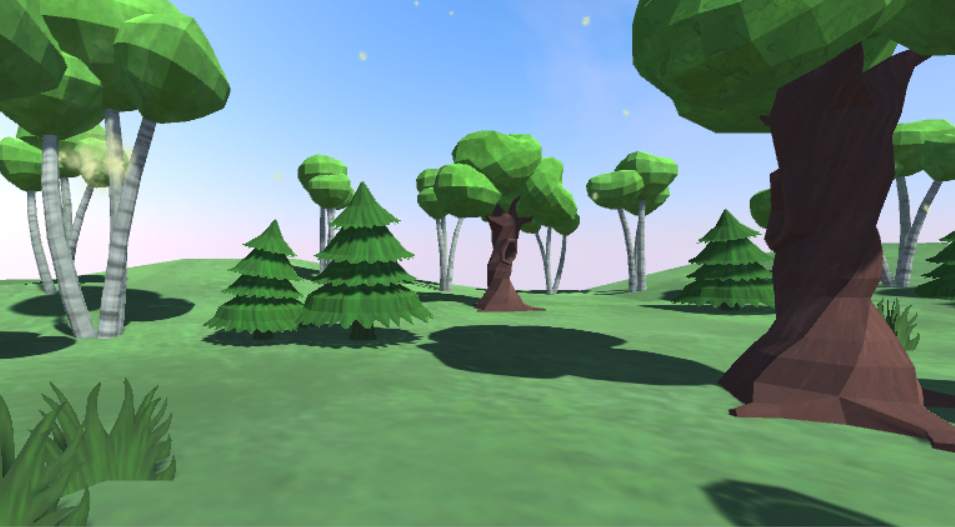
Day 2, Wednesday, consisted of the open XR seminar, hosted and moderated by writer, actor, improviser and producer Trent Pancy, and an exhibition with 30 different stands showcasing a variety of virtual, augmented and mixed reality demos, gear and solutions. TAMK also had a presence at the exhibition: guests were able to explore a VR art exhibition and a 360º-music video by students from Media and Arts, and a ‘virtual forest’ created by main campus students.
The associations that were showcasing their work were Rakka Creative Oy, TouchDown Creations, Oplatek Group Oy, Tridify Oy, Delta Cygni Labs, VirtualTraveller, Softability Group Oy, Fuusio Labs, Rejlers, VimAI, SMACC, AR Video Booth, Exove Oy, Teatime Research Ltd, Stereoscape Oy, Visuon (Visumo Oy), Realmax Oy, Leonidas Oy, Cybercom, Eligo.Studio Oy, Intopalo Oy, Voconaut and Simlab IT Oy.

In the afternoon, the winners of the challenge were announced on stage at the United Studio. The finalists competed for a total prize sum of 40,000€, with second and third place each receiving 5,000€, and the first place winner getting 30,000€.
3rd place: SimLab IT
2nd place: Manu AR, Teemu Tiainen, Karelia University of Applied Sciences
1st place: Voconaut
Voconaut, a team consisting of sound designers and web developers, claimed the first place prize with their augmented audio technology. It is designed to be utilized in factory environment, allowing for a number of improvements and advantages in different areas of production. The aim is to create a ‘full sonic layer for the client’s environment’ to solve and minimize issues like growing work spaces and visual technology distracting and requiring employees to attend to screens for information. The vision is for ‘ears to become the new screen’, which lets workers receive information tailored to specifically to them on-the-go, resulting in better focus on the task at hand.
Following the announcement of the winners, the seminar continued with lectures from multiple speakers with expertise in the field of VR/AR/XR. The first to speak was Steven M. Lavalle, who is currently a professor at the University of Oulu. He was an early founder american technology company Oculus VR and is the Chief Scientist of VR/AR/MR at Huawei Technologies. His lecture, titled ‘The Harsh Realities of Making XR’ explored the numerous limitations in the field, such as issues with perception, comfort and wirelessness.
 |
| Steven LaValle |
The second speaker was Antti Kuosmanen, Surface Business Group Lead at Microsoft, with a presentation titled ‘Digital transformations and Mixed reality’, who gave an insightful introduction to the context of digitalization and the steps that are required for developement.
The final presentation was by Markus Heinonen from Varjo Technologies, regarding their solution to the certain issues when it comes to VR such as the narrow field-of-vision which was mentioned by Lavalle earlier in the seminar. Their solution was inspired by the ability of human vision to show clearly and in detail the area which is being focused on, while everything on the periphery is much less detailed. ‘Bionic display’ is the technical implementation of this function, allowing for clearer visuals.
The seminar was livestreamed on Youtube and can still be watched at: https://www.youtube.com/channel/UCYe-eWx16FHemRgvWblJPyA
The seminar day concluded with two workshops, one held by XR developers Kari-Pekka Lammi and Jari Nevala from Leonidas, and another by Mika Isomaa, Developer Relations Engineer at Unity Technologies.
All in all, the event had a great turnout with a full house during the seminars, and a range of interesting displays and presentations about virtual, augmented and mixed reality technologies, and will hopefully be organized again next year to give more opportunities for those who are interested in the field, as well as the experts who can apply their knowledge and companies that employ these technologies to better their business.
Article in Finnish on the event by Business Tampere Magazine: https://businesstamperemagazine.fi/artikkelit/xr-challenge-toi-ihmiset-ja-ideat-yhteen
Post by Business Tampere in Finnish: https://www.sttinfo.fi/tiedote/nyt-on-aika-hyodyntaa-xr-teknologiaa?publisherId=54555086&releaseId=69843068
Text and photos: Hilma Nurmi 2018
Edits of photos: CF


 Suomeksi




 Posts
Posts